

How to Create a Mental Health Safety Plan
Please Note: if you are experiencing a mental health crisis, you can:
Call or text the 988 Lifeline | Text the Crisis Text Line: 741-741 | Visit your local CSB or emergency room
A mental health crisis is a lot harder to define than you’d think. For some people, it looks like a panic or anxiety attack involving severe anxiety and hyperventilation. For others, it may look like a week-long period of heightened paranoia and the inability to sleep or eat, or an escalation to a suicidal crisis. For the sake of this blog, we want to talk about creating a mental health safety plan that can be helpful regardless of what a crisis looks like to you.
As a reminder, a mental health crisis does not have to involve suicidal thoughts or urges to be considered a crisis! Moments of severe panic or mental breakdowns are still serious, and having a safety plan at the ready is important.
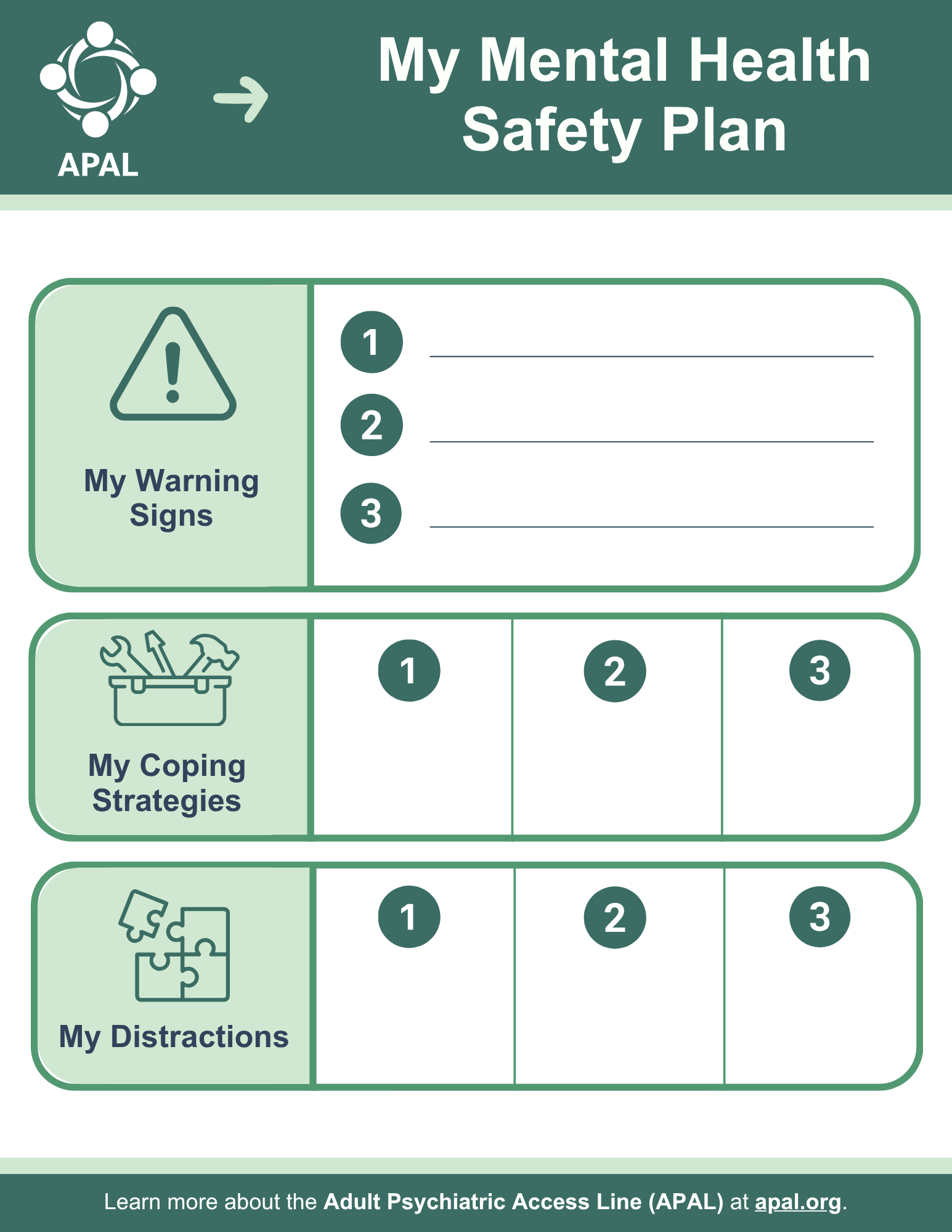
There are five steps to create an effective safety plan. We’re going to walk through each one, and we’ve designed a handout that you can print and fill out to keep on hand.
1. Warning Signs
List three warning signs that you are in (or about to be in) a mental health crisis. If you’re not sure where to start, here are some common ones:
- Participating in risky activities (such as drinking excessively, driving recklessly, etc.)
- Feeling extremely anxious and being unable to calm back down
- Feeling sad, depressed, or numb most of the time
- Experiencing uncharacteristic rage, anger, or irritability
- Neglecting your personal hygiene
- Losing interest in hobbies, work, or school
2. Coping Strategies
Coping strategies are actions we can take to help us feel better in the moment by calming our nervous systems. Different ones work for different people and different situations, so try not to be discouraged if you try one and it doesn’t work well. That doesn’t mean all coping mechanisms don’t work! Additionally, some coping mechanisms take practice to get better at, like meditation.
For this step, list three coping strategies (preferably tried and tested!) that work for you when you’re not feeling well. Here are some go-to coping mechanisms for stress and anxiety:
- Take a brisk walk outside
- Try breathing techniques
- Practice meditation with an app like DownDog or Headspace
- Place ice on your wrists, temples, cheeks, and back of neck
- Do some gentle yoga
- Practice progressive muscle relaxation
3. Distractions
When you’re spiraling and feeling out of control, distracting yourself can be a great way to come out of it. List three distractions that work best for you. Some common ones are:
- Petting or playing with a pet
- Calling a loved one to talk
- Doing the 5-4-3-2-1 grounding exercise
- Listening to music
- Doing a puzzle or playing a game
4. Support System
There are two different kinds of supports that are helpful to keep on hand. The first are your personal supports – people like your parents, partner, or friends who can be there or call you when you’re in a crisis. The second are your professional supports – whether that be your therapist, primary care provider, or psychiatrist.
For this step, list three personal supports and three professional supports that you can rely on during a crisis.
5. Safe Environment
It’s important to be in a safe environment when you’re experiencing a mental health crisis. Whether you need to remove items from your space, such as knives, razors, and scissors, or add things to your space, like a weighted blanket, stuffed animal, or music, name three ways you can make your space a safer one to be in.
Print out your mental health safety plan and keep it somewhere where you’ll be able to find it the next time you need it!